























Key points
- Pattern hair loss (androgenetic alopecia) is the most common cause in both men and women.
- Sudden, patchy or scarring hair loss needs a medical assessment to look for other causes.
- Minoxidil, and for men finasteride, have the strongest evidence; PRP and low-level laser may help some people.
- Treatments take 3–6 months to show results and must be continued to keep the benefit.
- A hair transplant is a surgical option for stable, well-planned cases, not a first step.
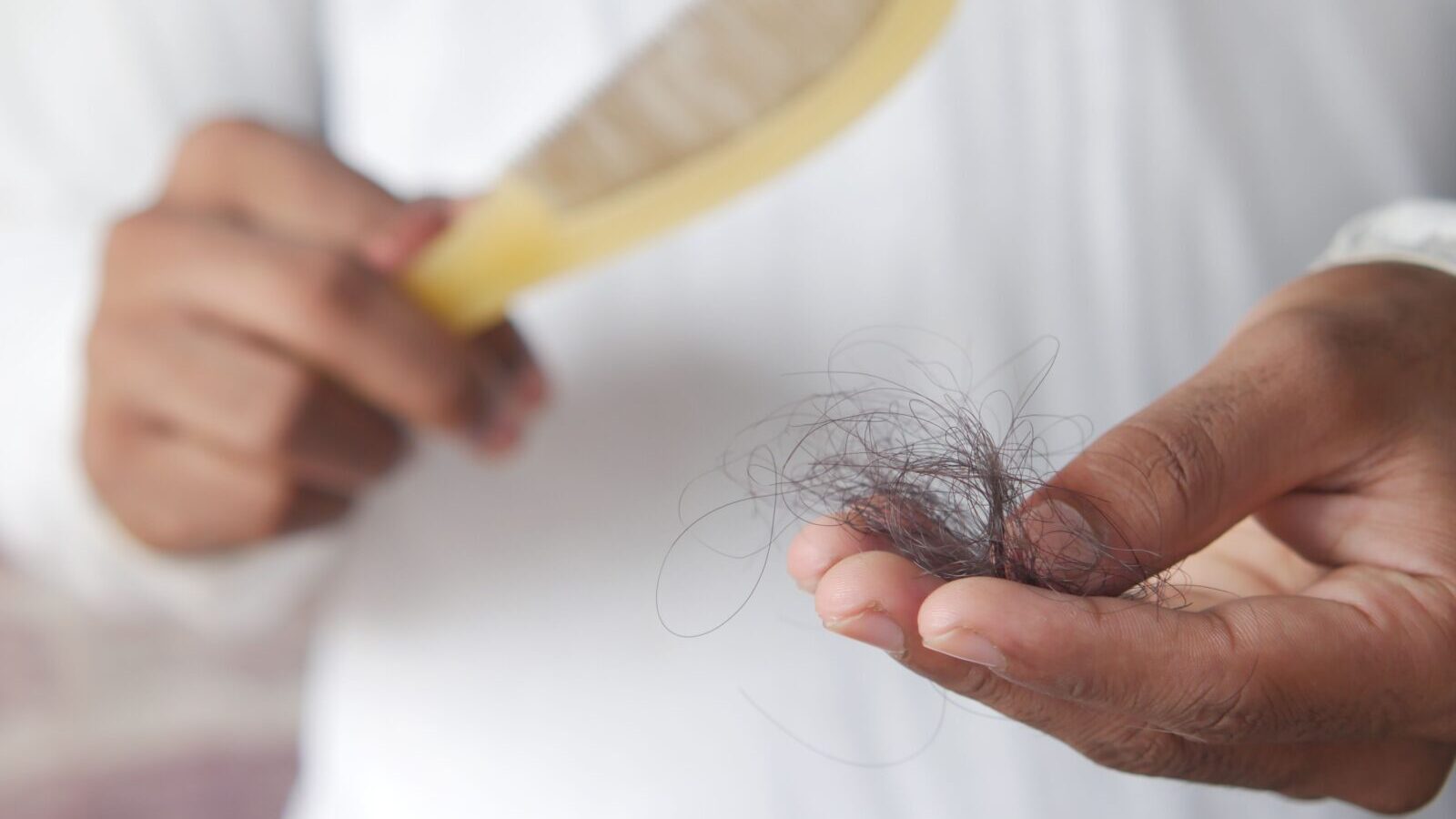
Losing 50–100 hairs a day is normal. Noticeable thinning, a widening parting, a receding hairline or hair that comes out in handfuls deserves attention, because early treatment preserves more hair than late treatment can regrow.
How hair grows
Each follicle cycles through a long growth phase (anagen, two to six years), a short transition (catagen) and a resting phase (telogen) before the hair sheds and a new one starts. Most hair loss is a problem of this cycle: follicles shrink and produce finer, shorter hairs, or too many follicles enter the resting phase at once.
Common causes
- Androgenetic alopecia: inherited sensitivity of follicles to hormones (DHT). In men it shows as a receding hairline and crown thinning; in women as a widening parting with the frontal hairline usually preserved.
- Telogen effluvium: diffuse shedding two to three months after a trigger such as high fever, surgery, childbirth, crash dieting or severe stress. It is usually temporary.
- Alopecia areata: an autoimmune condition causing round, smooth bald patches.
- Nutritional and medical factors: iron deficiency, thyroid disease, low vitamin D, protein deficiency and some medicines.
- Scarring (cicatricial) alopecias and traction: inflammation or tight hairstyles that damage follicles, sometimes permanently.
- Scalp conditions: severe dandruff, fungal infection or psoriasis.
When to see a doctor
Book an appointment if hair loss is sudden, patchy, painful or itchy, if the scalp looks red or scaly, if you notice scarring, or if it follows a new medicine or illness. A dermatologist can examine the scalp, use dermoscopy and order blood tests such as ferritin, thyroid function, vitamin D and, where relevant, hormone levels.
Treatments with evidence
- Minoxidil (2% or 5%, topical): works for men and women by prolonging the growth phase. Expect initial extra shedding in the first weeks; benefits usually appear after 3–6 months. Low-dose oral minoxidil is also used by some specialists under supervision.
- Finasteride and dutasteride (men): lower DHT and slow or stop progression, with regrowth in many men. Possible side effects, including sexual side effects, should be discussed with a doctor. These medicines are not for women who may become pregnant.
- For women: minoxidil is the standard; anti-androgen medicines such as spironolactone may be added in selected cases after assessment.
- Platelet-rich plasma (PRP): a growing body of research suggests a modest benefit as an add-on, but protocols vary and results are inconsistent.
- Low-level laser devices: may modestly increase density for some people; evidence is weaker than for medicines.
- Hair transplant: moves permanent hair from the back of the scalp. It suits people with stable loss and good donor hair, and results depend on the surgeon’s skill. Medical treatment is usually continued to protect the remaining native hair.
| Option | Evidence | Main point |
|---|---|---|
| Minoxidil | Strong | Men and women; must be continued |
| Finasteride / dutasteride | Strong (men) | Prescription; discuss side effects |
| PRP | Moderate to limited | Add-on; variable results |
| Low-level laser | Limited | Mild effect for some |
| Hair transplant | Strong for the right candidate | Surgical; needs stable loss |
Supplements and shampoos
Supplements help only if you are actually deficient, which a blood test can show. Taking high doses of biotin, zinc or vitamin A without a deficiency does not grow hair and can cause harm or interfere with laboratory tests. Anti-dandruff or caffeine shampoos may support scalp health but do not treat pattern hair loss on their own.
Everyday hair care
- Avoid very tight hairstyles and frequent heat or chemical treatments.
- Be gentle when brushing wet hair and avoid harsh scrubbing.
- Eat enough protein and iron-rich foods; avoid crash diets.
- Protect the scalp from strong sun, and do not smoke.
What to expect
Hair loss is slow to reverse. Take photos in the same light every three months; compare them rather than judging day to day. Stopping treatment usually leads to loss of the gains within months, so decide with your doctor on a plan you can keep for years.
Hair loss in women
Women most often notice a wider parting and overall thinning rather than a receding hairline. Causes include pattern hair loss, iron deficiency, thyroid disease, postpartum shedding, polycystic ovary syndrome and menopause. Because several causes often overlap, a full assessment including blood tests is worth doing before choosing a treatment. Finasteride is not used in women who may become pregnant, so options differ from those for men.
Myths worth dropping
- “Wearing hats causes baldness”: loose hats do not cause hair loss.
- “Frequent washing makes hair fall out”: washing removes hairs that were already shed; it does not cause the loss.
- “Baldness comes only from your mother’s side”: genes from both parents contribute.
- “Expensive products regrow hair”: few over-the-counter products have good evidence; ask a doctor before spending.
Living with hair loss
Hair loss can affect confidence and mood far more than the amount of lost hair suggests. Fibre sprays, a well-chosen haircut, scalp micropigmentation or a quality hairpiece are legitimate options while treatment takes effect or if you choose not to treat. If hair loss is causing anxiety or low mood, tell your doctor; support is available and worthwhile.
Related reading: Adult acne treatment · Sunscreen and skin aging · Melasma
Frequently asked questions
Is hair loss reversible?
It depends on the cause. Shedding after illness or stress usually recovers on its own; pattern hair loss can be slowed and partly reversed with treatment, but it is a long-term condition.
How long does minoxidil take to work?
Most people see changes after 3–6 months, with the best effect at about a year. Early extra shedding is common and temporary.
Is finasteride safe?
It is widely used and effective for men, but it can cause side effects in a minority of users. Talk to a doctor about risks and benefits.
Do hair vitamins work?
Only when you are deficient in something. Test first and supplement only if needed.
Does a hair transplant last forever?
Transplanted hairs are usually permanent, but nearby native hair can keep thinning, so ongoing medical treatment is often advised.
Last medically reviewed: November 2026.
References
- Kanti V, et al. Evidence-based guideline for the treatment of androgenetic alopecia in women and men, J Eur Acad Dermatol Venereol.
- American Academy of Dermatology — Hair loss: diagnosis and treatment.
- Rossi A, et al. Efficacy and safety of treatments for androgenetic alopecia: a review.
This article is for general information and does not replace a medical consultation.