






















Key points
- An implant replaces the root and crown of one tooth without touching the neighbouring teeth.
- A bridge uses the neighbouring teeth as supports, which must be reshaped to carry crowns.
- Implants help preserve jawbone; a bridge does not stop bone loss under the missing tooth.
- Good implant results need enough bone, healthy gums and a non-smoking, well-maintained mouth.
- The best option depends on bone volume, the health of adjacent teeth, general health, timing and budget.
Losing a tooth affects chewing, speech and appearance, and the remaining teeth can drift into the gap over time. The two most common fixed replacements are a dental implant and a dental bridge. Both can look natural; they differ in how they are supported and in what they mean for the rest of your mouth. This guide explains the differences so you can have a more informed conversation with your dentist.
How a dental implant works
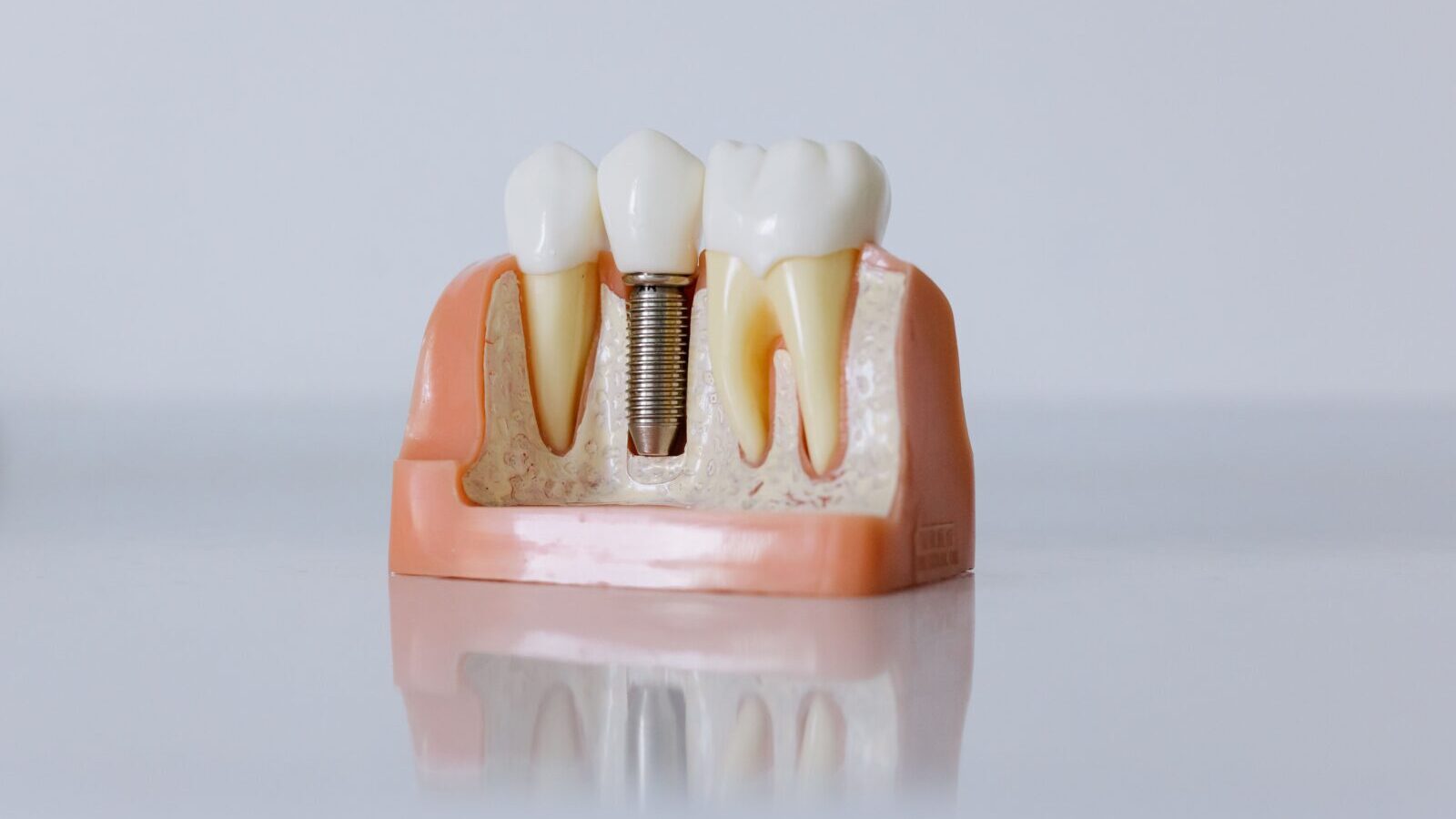
An implant is a small titanium or zirconia post placed in the jawbone under local anaesthesia. Over several weeks to a few months it integrates with the bone (osseointegration). A connector (abutment) and a crown are then attached. Because the implant stands on its own, the neighbouring teeth are not cut, and chewing forces are transferred to the bone, which helps keep it healthy. When bone volume is limited, a bone graft or sinus lift may be needed first; see our guide to implants and bone grafting.
How a bridge works
A conventional bridge is a single piece made of an artificial tooth joined to crowns on the teeth on either side of the gap. To fit those crowns, the supporting teeth are reduced in size. A bridge is usually completed in two to three visits and does not involve surgery. If the supporting teeth are already heavily restored or crowned, a bridge can be a reasonable choice.
Comparing the options
| Factor | Implant | Bridge |
|---|---|---|
| Neighbouring teeth | Left untouched | Reduced to carry crowns |
| Jawbone | Stimulated and preserved | Not stimulated; bone can shrink |
| Treatment time | Several months in most cases | A few weeks |
| Surgery | Minor surgical procedure | None |
| Typical lifespan | Often 15 years or more with care | Often 10–15 years |
| Upfront cost | Higher | Lower |
| Cleaning | Brushing plus interdental brushes | Special floss threaders under the bridge |
Lifespans vary with oral hygiene, smoking, bite forces and regular check-ups, so figures are only a guide.
Who is a good candidate for an implant?
Most healthy adults whose jaw has finished growing can be considered. Your dentist will usually check:
- Bone volume and quality, often with a 3D scan (CBCT).
- Gum health: active gum disease should be treated first.
- General health: poorly controlled diabetes, heavy smoking and some medicines (for example certain bone-strengthening drugs) raise the risk of complications and need to be discussed.
- Bite and habits: grinding (bruxism) can overload implants and may require a protective night guard.
Risks and complications
Both treatments are safe in suitable patients, but each has risks. Implants can develop inflammation around the implant (peri-implantitis), fail to integrate, or rarely affect nearby nerves or sinuses. Bridges can develop decay under the crowns, gum problems around the supporting teeth, or loosening of the cement. Careful planning, good hygiene and regular reviews reduce most of these problems.
How to choose
- If neighbouring teeth are healthy and bone is sufficient, an implant is usually preferred because it protects them.
- If neighbouring teeth already need crowns, or surgery is not advisable, a bridge may make sense.
- If several teeth are missing, an implant-supported bridge or other options may be better; ask about the full range.
- Ask for a written treatment plan with costs, number of visits and what happens if something needs repair.
Questions to ask your dentist
- Which option protects my other teeth best in the long term?
- Do I need a scan or a bone graft first?
- What is the total cost, including follow-up and maintenance?
- What is your experience with this procedure, and what is the plan if it fails?
What the treatment journey looks like
An implant usually follows these stages: consultation and 3D scan, extraction if the tooth is still present, healing, implant placement, a healing period of about two to six months, then impressions and the final crown. In suitable cases a tooth can be extracted and an implant placed on the same day, and a temporary crown may be fitted, but this depends on bone and gum condition. A bridge is faster: the supporting teeth are prepared, a temporary bridge is worn for one to two weeks and the final bridge is cemented at the next visit.
Aftercare and long-term maintenance
Both options last longest when cleaned well. Brush twice a day with a soft brush, clean between the teeth daily (interdental brushes or water flossers around implants, floss threaders under a bridge), and attend professional cleanings, usually every six months or as advised. Report bleeding, swelling, a loose crown or a bad taste early; implant gum disease is easier to treat when caught early.
Other options worth knowing
- Resin-bonded (Maryland) bridge: a conservative bridge glued to the back of neighbouring teeth with minimal reshaping, often used for front teeth.
- Removable partial denture: the lowest-cost option, but less stable and more demanding to keep clean.
- Leaving the gap: acceptable in some back-tooth situations, but teeth can tilt and the bone can shrink, so discuss it before deciding.
Cost and value
An implant costs more upfront, while a bridge costs less but may need earlier replacement and can harm supporting teeth if they fail. Looking at the cost over 15 to 20 years, including maintenance and possible repairs, gives a fairer comparison than comparing the first invoice.
The bottom line
There is no single best choice for everyone. Implants are usually the better long-term investment for healthy mouths with enough bone, while bridges remain a sound, quicker option when neighbouring teeth already need crowns or surgery is not suitable. A thorough examination, a scan where needed and an honest discussion of costs and risks will point to the right answer for you. Whichever you choose, consistent daily cleaning and regular dental visits matter more than the material itself.
Related reading: Dental implants and bone grafting · Gum disease and general health · Bruxism and teeth grinding
Preparing for a dental licensing exam? Practise with our free board exam simulator — including INBDE and DHA practice tests.
Frequently asked questions
Is an implant painful?
The procedure is done under local anaesthesia. Mild to moderate soreness for a few days is common and is usually managed with simple painkillers.
How long do implants last?
Many last 15 years or longer with good hygiene and regular check-ups, and some last a lifetime. The crown may need replacing sooner.
Can I get a bridge if I do not want surgery?
Yes, a bridge needs no surgery, but it requires reshaping the neighbouring teeth.
Does insurance cover implants or bridges?
Coverage varies widely by plan and country. Ask for a pre-treatment estimate.
What if I smoke?
Smoking raises the risk of implant failure and gum problems. Quitting before and after treatment improves results.
Last medically reviewed: November 2026.
References
- Misch CE. Contemporary Implant Dentistry. Elsevier.
- Salvi GE, et al. Peri-implant diseases and conditions: consensus reports, J Clin Periodontol.
- Pjetursson BE, et al. Survival and complication rates of fixed dental prostheses and implants, Clin Oral Implants Res.
This article is for general information and does not replace a dental consultation.